Can Children and Teens Need Gum Disease Treatment?
Most parents expect cavities, braces, and the occasional chipped front tooth. Fewer expect to hear that a child or teenager may need Gum Disease Treatment. That surprise is understandable. Gum disease is often framed as an adult problem, something tied to age, smoking, or years of neglected dental care. In practice, younger patients can develop gum inflammation, tissue damage, and even early bone loss, though the pattern is often different from what dentists see in adults.
The more useful question is not whether children and teens can get gum disease. They can. The real question is what it looks like at those ages, how serious it tends to be, and when treatment moves beyond routine cleanings and better brushing. Those distinctions matter, because a red, puffy gumline in a 9 year old is not handled the same way as deep periodontal pockets in a 16 year old with a strong family history of aggressive disease.
The short answer is yes, but the spectrum is broad
In younger patients, gum problems usually begin as gingivitis. That means inflammation of the gums without permanent destruction of the bone and connective tissue that hold teeth in place. Gingivitis is common in childhood and adolescence. Puberty, orthodontic appliances, inconsistent brushing, and frequent snacking can all make the gums more reactive. A child may have bleeding during brushing, tenderness near the gumline, bad breath, or gums that look puffy instead of tight and coral pink.
That stage is important because it is reversible. When plaque is removed consistently and the gums are professionally cleaned, the tissue often recovers well. This is one reason dentists push so hard on prevention. Early gum inflammation is usually not a disaster. Left alone, though, it can become the starting point for something more stubborn.
True periodontitis, the more serious form of gum disease, is less common in children but not rare enough to ignore. Teenagers, in particular, can present with attachment loss and bone loss around certain teeth. Sometimes it shows up around first molars and incisors. Sometimes it appears in a broader pattern when oral hygiene is poor or a medical condition changes the body’s inflammatory response. When that happens, Gum Disease Treatment is not just about cleaning the teeth. It becomes a matter of protecting the supporting structures before permanent damage advances.
Why younger gums get into trouble
Children and teens are not simply small adults. Their mouths are changing constantly. Baby teeth loosen and fall out, permanent teeth erupt, bite relationships shift, and oral hygiene habits often lag behind those changes. A mouth in transition tends to trap plaque in places that are easy to miss.
Puberty adds another layer. Hormonal changes can make gum tissue more sensitive to plaque, so a teenager who was previously getting by with mediocre brushing may suddenly develop bleeding gums. The amount of plaque may not be dramatically higher, yet the gums look much worse. Dentists see this often around ages 11 to 15. Parents are caught off guard because the child insists they are brushing “the same as always,” which may be true.
Braces and clear aligner attachments can complicate the picture. Brackets create ledges and corners where plaque sits undisturbed. Bands around molars can irritate the gums and hold food debris. Even motivated teens can struggle to clean thoroughly when every tooth now has hardware attached to it. A child who never had gum bleeding before orthodontic treatment may suddenly develop it within weeks.
Mouth breathing can contribute as well. When lips stay parted, the front gums, especially in the upper arch, can dry out and become inflamed. Enlarged tonsils, allergies, chronic nasal congestion, and certain sleep issues can all push a child toward mouth breathing. The gums then take on a red, swollen appearance that does not fully improve until the breathing pattern is addressed.
Diet also plays a role, though not always in the way people think. Sugar matters, but frequency often matters more than the occasional treat. A child who sips sweet drinks all afternoon, grazes on crackers, or relies on sports drinks during practice gives plaque bacteria a steady supply. That environment fuels both cavities and gum irritation.
Then there are the less obvious factors, the ones that tend to separate mild gingivitis from more serious disease. Some children have medical conditions that affect immunity, healing, or inflammation. Diabetes, certain blood disorders, and some rare genetic or immune conditions can make periodontal disease more likely or more severe. Certain medications can also enlarge gum tissue or change saliva flow, making plaque control harder.
What gum disease looks like in children and teens
Parents often imagine gum disease as receding gums and loose teeth. Those signs can happen, but earlier clues are much more common.
A child may spit pink in the sink while brushing. A teen may complain that flossing hurts, then stop flossing because it seems to make things worse. Gums may look shiny, swollen, or uneven. Breath may stay unpleasant even after brushing. The orthodontist may mention “inflamed tissue” around brackets. A hygienist may note tartar buildup behind the lower front teeth or bleeding in several areas.
Sometimes the signs are subtle. I have seen teenagers with almost no pain and very little visible swelling, yet probing around the teeth revealed pockets deeper than expected for their age. On X rays, the bone level around certain molars was not where it should have been. Those cases are why regular dental visits matter. Gum disease, especially in its earlier stages, is often quiet.
The pattern of disease also provides clues. Generalized puffiness across many teeth usually points toward plaque related gingivitis, hormones, or orthodontic hygiene challenges. Severe destruction around only a few teeth, especially first molars and incisors, raises concern for a more aggressive periodontal condition. That distinction affects urgency, treatment planning, and whether referral to a periodontist is warranted.
When “just brush better” is not enough
For mild gingivitis, improved home care and a professional cleaning may be enough. But there is a line where routine advice stops being adequate.
A child or teen likely needs targeted Gum Disease Treatment if the gums bleed regularly despite reasonable brushing, if tartar buildup is heavy, if periodontal pockets are deeper than expected, or if there is evidence of attachment or bone loss. Persistent bad breath, gum recession, gum enlargement, or mobility in a tooth also deserve closer evaluation.
One practical issue is that parents and teens often underestimate what “reasonable brushing” means. Many kids brush for 20 to 30 seconds and call it two minutes. Many teens with braces move the brush across the front surfaces and miss the gumline entirely. So a dentist has to separate technique problems from disease severity. Sometimes the answer is simple: the patient needs better instruction, a powered toothbrush, floss threaders, and a tighter recall interval. Other times the tissue changes are too advanced for that alone.
How dentists diagnose the problem
A proper diagnosis goes beyond a quick look. The dental team will assess plaque levels, bleeding, gum color and contour, tartar deposits, and how easily the tissue bleeds on gentle probing. They may measure pocket depths around the teeth. In older children and teens, these measurements can be quite helpful, especially if certain areas look suspicious.
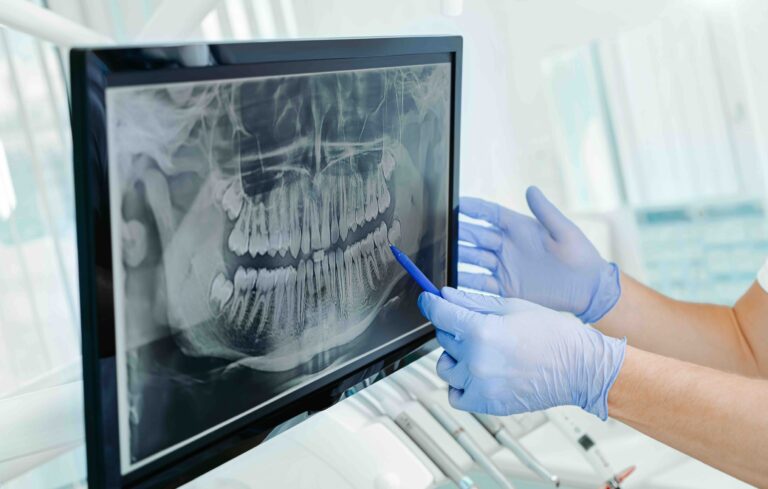
Dental X rays matter when bone loss is a concern. They help show whether the support around the teeth is intact or beginning to break down. If the pattern suggests a more aggressive form of periodontal disease, the dentist may ask about family history, medical history, medications, mouth breathing, and any symptoms beyond the mouth.
This is one area where age should not lull anyone into complacency. A 14 year old with bone loss is not “too young” for periodontal evaluation. The disease does not read birth dates.
What treatment usually involves
Treatment depends on severity, age, cooperation, and the cause of the inflammation. The goal is straightforward: remove the bacteria and hardened deposits that drive the inflammation, help the tissue heal, and reduce the chance of recurrence.
For many children, the first step is a thorough professional cleaning and detailed home care coaching. That sounds basic, but it often works remarkably well when done properly. The dental team may demonstrate exactly where the brush should angle at the gumline, how to work around orthodontic brackets, and which flossing aids are realistic for a busy teen.
When disease has progressed further, deeper cleaning below the gumline may be necessary. That can include scaling and root planing in areas where plaque and calculus have collected beneath the gums. In selected cases, antimicrobial rinses or localized antimicrobial therapy may be considered, though these are usually adjuncts, not substitutes for mechanical cleaning. If a systemic issue is contributing, coordination with the child’s physician may be part of treatment.
A specialist referral becomes especially important when bone loss appears early, when the disease pattern is unusual, or when tissue does not respond as expected. Periodontists see the edge cases more often and can judge whether additional imaging, microbial analysis, or more intensive therapy is appropriate.
What parents should watch for at home
The most useful signs are usually the simplest ones. If brushing regularly causes bleeding for more than a few days, pay attention. Healthy gums can bleed after a long lapse in flossing, but that should improve, not persist indefinitely. If a child avoids brushing a certain area because it “always hurts,” that area should be examined. If a teen with braces has gums that seem to swell over the brackets, that may be more than cosmetic irritation.
Here are a few signs worth taking seriously:
- Bleeding during brushing or flossing that continues for a week or more
- Gums that look puffy, shiny, or unusually red
- Persistent bad breath despite brushing
- Gum recession or teeth that appear longer than before
- A loose tooth that is not a baby tooth nearing normal exfoliation
That list is not meant to alarm. It is meant to help families distinguish a minor off day from a pattern that deserves care.
Braces can blur the picture
Orthodontic treatment deserves special attention because it changes the baseline. Mild gum puffiness around brackets is common. So is temporary tenderness after adjustments. What is not normal is chronic bleeding, thick layers of plaque around brackets, or gums that begin to overgrow the hardware and make cleaning nearly impossible.
I have seen highly responsible teens struggle during orthodontic treatment because their old routine simply no longer worked. A brush that was fine before braces now missed half the plaque-retentive surfaces. Switching to a powered brush, adding an interdental brush, and increasing hygiene visits from every six months to every three or four months often changed the trajectory quickly.
Orthodontists and general dentists usually catch these issues early, but families help most when they do not assume every gum change during braces is unavoidable. Some irritation is expected. Ongoing inflammation is not.
The cases that deserve extra caution
Most young patients with gum problems do not have severe periodontal disease. Still, there are situations where the threshold for concern should be lower.
A strong family history of early tooth loss is one. If parents or close relatives lost permanent teeth young due to “bad gums,” that history matters. https://gregorymzzu463.publishlane.com/posts/natural-remedies-vs-professional-gum-disease-treatment Diabetes, immune disorders, and conditions that affect neutrophil function or connective tissue integrity also increase risk. So does tobacco use, including vaping, which many teens do not volunteer unless asked directly. The research on vaping and gum tissues is still evolving, but enough is known to say it is not benign for oral health.
Some children with special health care needs also face practical barriers to oral hygiene. Limited dexterity, sensory issues, medication effects, and dependence on caregivers can all make plaque control much harder. In those cases, prevention plans need to be realistic, not idealized.
Treatment is rarely a one-time event
One common misconception is that Gum Disease Treatment is a single procedure that fixes the issue permanently. In reality, successful treatment depends on maintenance. Gum inflammation tends to return if the underlying plaque control problem returns. This is particularly true in teens, whose routines can be erratic. Sports, late nights, school stress, and general independence all work against consistency.
A child who responds beautifully after a cleaning may need shorter recall intervals for a while. Three or four month hygiene visits are often appropriate when inflammation has been persistent, when braces are present, or when the patient has shown early periodontal breakdown. Those appointments are not punitive. They are preventive, and they give the team a chance to reinforce technique before the disease regains momentum.
What home care actually works
Families often ask which mouthwash or gadget is best. Usually, the answer is less exciting than they hope. Technique and consistency matter more than novelty. A soft or extra soft toothbrush, used carefully at the gumline for a full two minutes, twice daily, remains the foundation. Flossing or using an appropriate interdental aid matters because toothbrush bristles do not clean between teeth effectively.
For children, parents often need to supervise longer than expected. A 7 year old may be able to hold a toothbrush but still lack the dexterity to clean thoroughly. Many 10 year olds still benefit from a parent doing a final pass at night. Teenagers want privacy and independence, which is developmentally normal, but results matter more than intentions. If gums are bleeding, the routine needs adjusting.
These measures tend to help most:
- Brush twice a day with focused attention on the gumline
- Clean between the teeth daily with floss or another recommended aid
- Reduce constant snacking and frequent sugary or acidic drinks
- Keep regular professional cleanings, more often if advised
- Tell the dentist about braces problems, mouth breathing, medications, or family history
A small change, done daily, usually beats an elaborate routine that lasts four days.
Can gum disease in kids be reversed?
Gingivitis, yes, often quite predictably. Once plaque and calculus are removed and home care improves, the gums can return to a healthy state. Bleeding decreases, swelling settles, and the tissue firms up.
Periodontitis is different. The inflammation can be controlled and the disease can often be stabilized, but lost bone and attachment do not simply regrow on their own. That is why early detection matters so much. In a teenager, preserving what support remains is a very worthwhile goal. Even when damage has already occurred, prompt treatment can protect the long-term outlook for those teeth.
The bigger picture for families
Parents sometimes feel guilty when gum problems are diagnosed, especially if they assumed they were staying on top of dental care. Guilt is not useful here. What matters is recognizing that children and teens go through phases where their mouths become harder to manage. Hormones change the gum response. Braces make hygiene harder. Busy schedules erode routines. Some young people are also simply more susceptible than others.
The encouraging part is that most cases respond well when addressed promptly. The key is not to dismiss bleeding gums as trivial or to assume age rules out periodontal problems. If the gums look inflamed, smell persistently unpleasant, or bleed often, it is reasonable to ask directly whether the child needs more than a standard cleaning. That question can lead to earlier diagnosis, better guidance, and, when necessary, timely Gum Disease Treatment.
Healthy gums are not just an adult concern. They are part of a child’s foundation for keeping permanent teeth for life.
Dental Group Of Beverly Hills
Address: 8641 Wilshire Blvd #125, Beverly Hills, CA 90211
Phone number: +13109296335
FAQ About Gum Disease Treatment
How to improve gum health quickly?
To improve gum health quickly, eliminate plaque buildup by brushing for two full minutes twice a day at a 45-degree angle to the gumline. Floss daily to clean under the gumline, and rinse with an antimicrobial, alcohol-free mouthwash. For immediate relief of soreness, use a warm saltwater rinse.
What is the fastest way to cure gum disease?
To quickly cure early-stage gum disease (gingivitis), eliminate the plaque buildup causing the inflammation. Brush gently but thoroughly for two minutes twice daily, floss daily, and use an antibacterial mouthwash or a warm saltwater rinse. However, if tartar has hardened, professional treatment is necessary.
How do I treat my gum disease at home?
You can treat early gum disease at home by practicing strict daily oral hygiene, rinsing with salt water or antibacterial mouthwash, and quitting smoking. True gum disease (especially advanced forms like periodontitis) cannot be fully cured at home once tartar forms, and you must see a dentist for professional cleanings.